

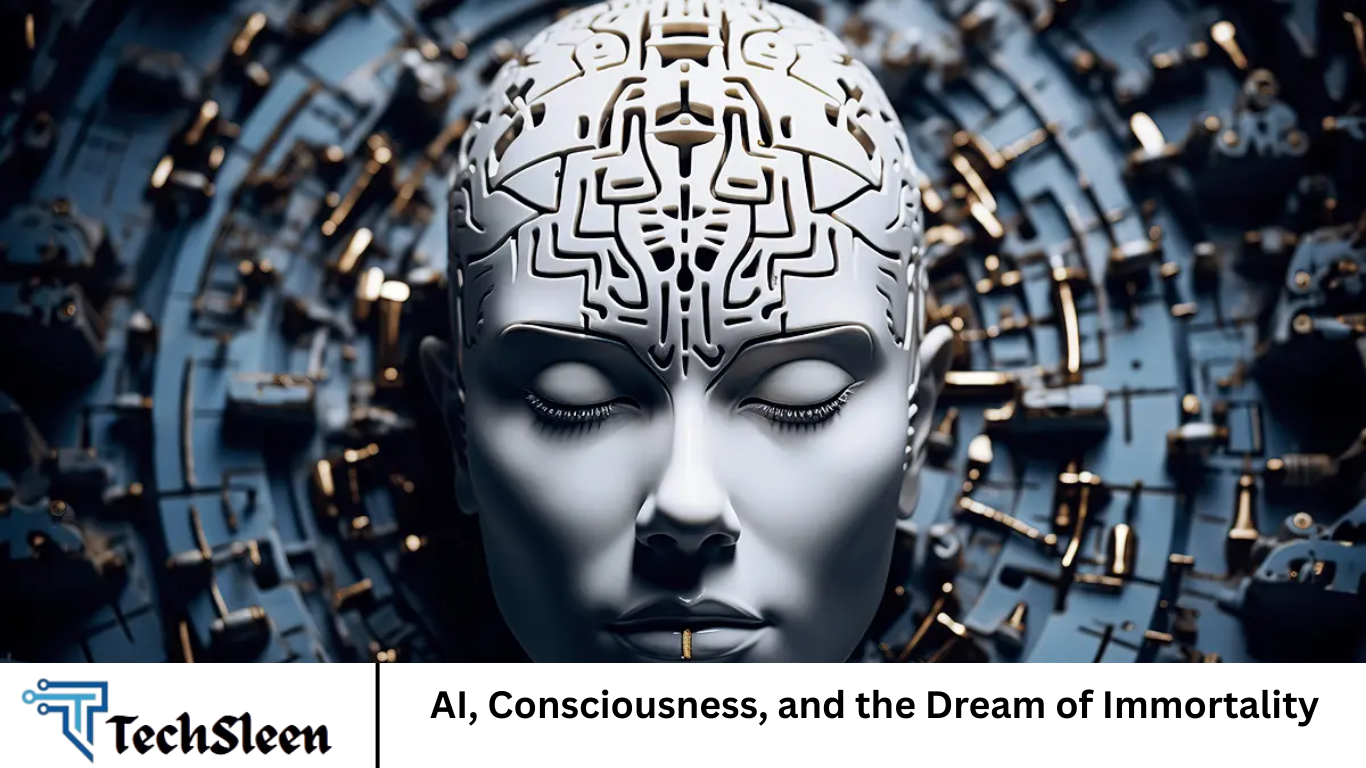
From the earliest myths to modern science fiction, humans have dreamed of escaping the inevitability of death. Immortality—a state of eternal life—has fascinated thinkers, philosophers, and scientists alike. Today, artificial intelligence (AI) is emerging as a potential tool in humanity’s quest to transcend our biological limits.
AI is no longer limited to automating tasks or analyzing data; it has begun to probe the very nature of human consciousness. Scientists and futurists are asking profound questions: Could AI help preserve memories, personality, or even consciousness itself beyond the lifespan of the human body?
But what does it mean to pursue immortality with AI? Can machines help humans live forever, or is this dream destined to remain science fiction? In this article, we explore the intersection of AI, consciousness, and the dream of immortality, examining the technologies, theories, ethical dilemmas, and philosophical questions that shape this daring pursuit.
More Read: 10 Best Practices for building reliable AI agents
The Human Desire for Immortality
The desire to live forever is deeply ingrained in human culture. Ancient civilizations imagined immortality through gods, alchemy, or elixirs of life. Literature, religion, and mythology are full of stories of humans seeking eternal life. Today, this age-old quest has shifted toward scientific and technological solutions.
Modern advances in medicine, biotechnology, and now AI suggest that extending human life—or even achieving some form of digital immortality—might one day be possible. AI is no longer just a tool for automation; it has become a medium to explore the very essence of consciousness and identity.
Understanding Consciousness: The Core of Immortality
Before diving into AI’s role, it’s essential to understand consciousness. Philosophers and neuroscientists define consciousness as the subjective experience of being—the sense of “I” that persists through thoughts, memories, and emotions. Achieving immortality isn’t just about preventing physical death; it’s about preserving consciousness.
Some scientists believe that consciousness can be mapped, digitized, and even uploaded into a computational medium—a concept known as mind uploading. While controversial and still largely theoretical, this idea underpins many discussions about AI-driven immortality.
AI and Mind Uploading
Mind uploading, also called whole-brain emulation, involves creating a digital copy of a person’s brain, complete with memories, personality, and consciousness. AI plays a crucial role in this process by:
- Mapping Neural Connections: Advanced AI can analyze billions of neurons and synapses in the human brain, creating detailed digital maps of neural activity.
- Simulating Brain Function: AI algorithms can model how neurons interact, allowing a virtual brain to simulate human thought processes.
- Preserving Personality and Memories: AI can organize, store, and reconstruct personal experiences in a digital form, potentially enabling a digital version of “you” to exist after biological death.
Tech companies, research labs, and startups like Neuralink and Kernel are exploring ways to interface AI with the human brain. While true mind uploading remains far off, the foundations are being laid today.
AI in Life Extension and Health
Even without full consciousness transfer, AI is revolutionizing human longevity:
- Predictive Healthcare: AI can detect diseases earlier than traditional methods, increasing life expectancy.
- Drug Discovery: AI accelerates the discovery of therapies for age-related conditions.
- Personalized Medicine: AI analyzes genetic, environmental, and lifestyle data to recommend personalized strategies for healthy aging.
By preventing premature death and slowing biological aging, AI may offer a practical pathway toward extended life, if not literal immortality.
Digital Immortality: Beyond Biology
Another form of AI-driven immortality lies in digital legacies:
- Virtual Avatars: AI can create chatbots or virtual versions of deceased individuals, preserving their personality and communication style.
- Memory Preservation: Social media, personal writings, and digital footprints can be curated and enhanced by AI to maintain a digital presence after death.
- Simulation Worlds: Some envision AI-generated virtual environments where digital consciousness could continue to exist indefinitely, essentially offering a “life” beyond the physical body.
While not biological immortality, these methods allow aspects of human identity to persist, blurring the lines between life and memory.
Ethical and Philosophical Challenges
The dream of AI immortality raises profound ethical questions:
- Identity and Continuity: If your mind is uploaded into a machine, is it really “you” or just a copy? Philosophers debate whether continuity of consciousness is preserved.
- Inequality: Who would have access to AI-driven immortality? Could it deepen societal divides?
- Psychological Impact: Living indefinitely—or in digital form—could have unforeseen mental health effects.
- Consent and Rights: Would AI avatars or digital consciousnesses have rights? Could they be deleted or modified?
Addressing these questions is critical before immortality technologies become widely available.
The Limits of AI and Immortality
Despite rapid progress, significant limitations remain:
- Incomplete Understanding of Consciousness: Scientists still don’t fully understand how subjective experience emerges from neural activity. Without this understanding, AI-based immortality may remain speculative.
- Computational Challenges: Simulating a human brain in real time requires immense processing power—far beyond what current computers can achieve.
- Biological Constraints: Even with AI, the human body remains vulnerable to aging and disease unless integrated with biotechnology.
AI may accelerate the pursuit of immortality, but it cannot yet overcome fundamental scientific barriers.
The Cultural and Social Implications
The possibility of AI-assisted immortality could reshape human society:
- Population and Resource Management: Extended lifespans could strain resources, requiring new economic and social policies.
- Redefining Life Stages: Traditional concepts of childhood, adulthood, and retirement may change.
- New Philosophical Questions: The nature of life, death, and meaning may evolve as humans interface with AI in unprecedented ways.
Ultimately, immortality is not just a scientific challenge—it’s a societal one.
The Road Ahead: Realistic Expectations
AI offers unprecedented tools to extend life, preserve consciousness, and even create digital forms of immortality. However, achieving literal eternal life remains a distant dream. Current efforts should focus on:
- Enhancing quality of life
- Preventing premature death
- Exploring safe and ethical AI applications
By combining AI, biotechnology, and ethical foresight, humanity may one day approach forms of immortality that were once considered purely mythical.
Frequently Asked Question
Can AI make humans immortal?
AI can extend life and preserve digital aspects of identity, but literal immortality remains theoretical. Full consciousness transfer is not yet possible.
What is mind uploading?
Mind uploading is the process of creating a digital copy of a human brain, potentially preserving consciousness in a computer. It’s largely experimental and speculative.
How is AI used in life extension?
AI predicts diseases, accelerates drug discovery, and personalizes healthcare strategies, helping humans live longer and healthier lives.
Will a digital version of me be the real me?
Philosophers debate this. A digital copy may preserve memories and personality, but whether it retains true consciousness is uncertain.
Are there ethical concerns with AI immortality?
Yes. Issues include identity, consent, inequality, and rights for digital consciousness. Addressing these is crucial before widespread use.
How close are we to achieving AI-driven immortality?
While AI is advancing in healthcare and brain simulation, true immortality is still far off. Current technologies focus on health extension and digital legacies.
Could AI immortality change society?
Yes. Extended lifespans may alter population dynamics, redefine life stages, and raise profound philosophical and social questions.
Conclusion
The intersection of AI, consciousness, and immortality represents one of humanity’s boldest pursuits. While full immortality remains elusive, AI offers promising avenues to extend life, preserve identity, and explore the boundaries of human consciousness.
As science progresses, society must carefully navigate the ethical, social, and philosophical implications of living longer—or perhaps, living forever. The dream of immortality, once confined to mythology and fiction, may increasingly become a technological frontier—guided by AI, enriched by consciousness, and forever challenging our understanding of life itself.