Close Menu
    Facebook X (Twitter) Instagram
    TechSleen
    • Home
    • AI
    • Gaming
    • Business
    • Tech News
    • Cybersecurity
    TechSleen
    Home»Blog»Air-Filled Silicon Wafers Turn Ultraviolet Light Into Flat Mirrors
    Blog

    Air-Filled Silicon Wafers Turn Ultraviolet Light Into Flat Mirrors

    Fleur BosBy Fleur BosNovember 24, 2026No Comments3 Mins Read
    Facebook Twitter Pinterest Telegram LinkedIn Tumblr WhatsApp Email
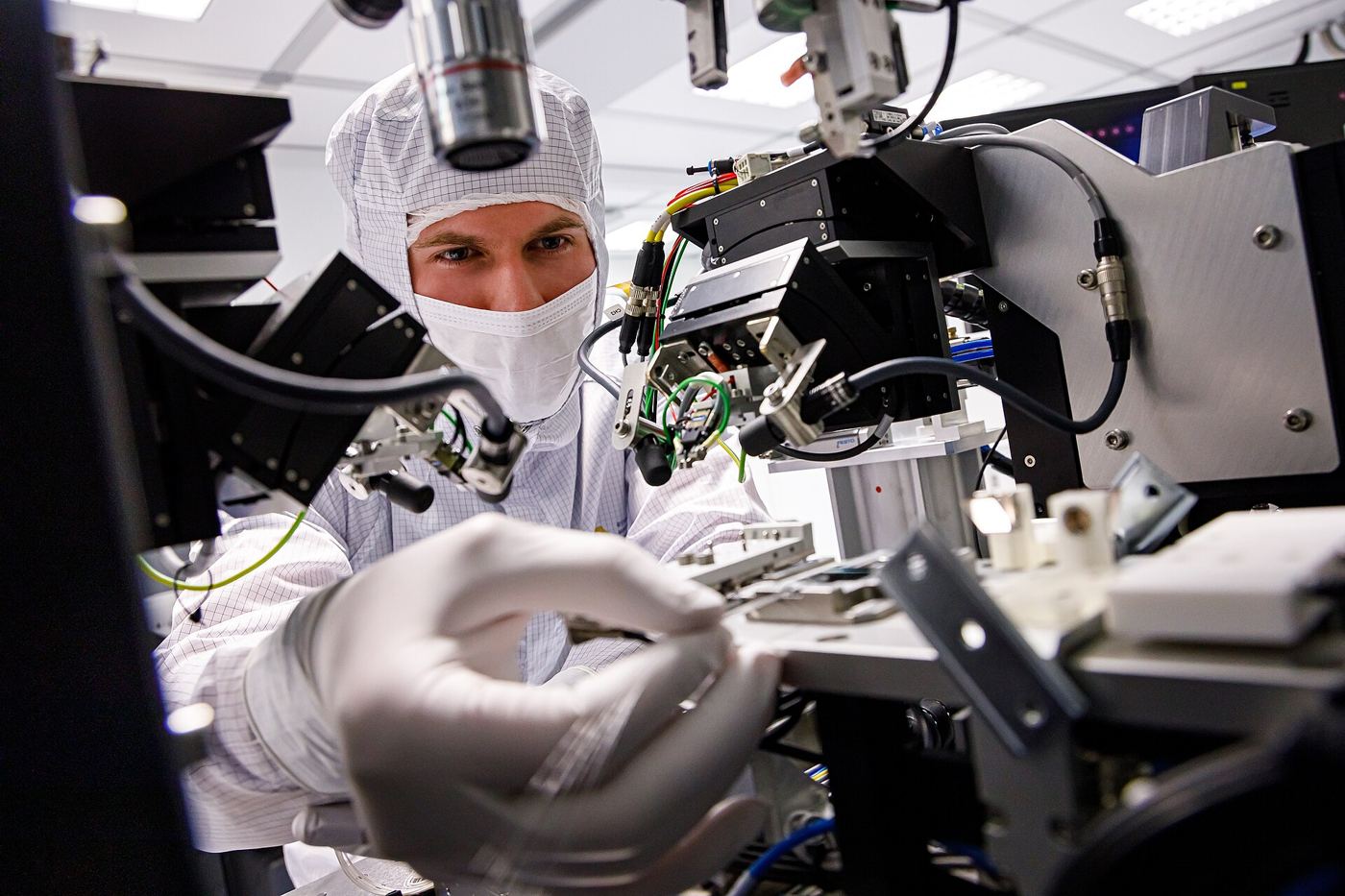
    A silicon wafer held up in a clean laboratory.

    Researchers at the University of Stuttgart have turned ordinary silicon wafers into flat mirrors that focus ultraviolet light, using nothing more than precisely placed holes filled with air. The team reported in early November 2026 that wafers patterned with tiny air holes can bend and focus ultraviolet rays in the same way a curved mirror does, without any curved surface at all. Ultraviolet optics are normally bulky and expensive, because few materials handle the short wavelengths well and lenses absorb much of the light. A flat wafer that does the same job could shrink the optical systems inside chip-making machines, microscopes and sensors.

    What the Evidence Shows

    The advance matters because ultraviolet light is the workhorse of modern chip manufacturing, where ever-shorter wavelengths print ever-smaller circuits onto silicon. Lighter, flatter optics could make those machines cheaper and more compact, and the same trick could improve ultraviolet microscopes used to inspect cells and materials. The approach also shows how structuring a familiar material at the nanoscale can give it entirely new optical behaviour, a strategy researchers are applying to lenses, sensors and displays. The next step is to test how efficiently the wafers focus light across different ultraviolet bands, and whether the design can be manufactured at the scale industry needs. Reporting and analysis from sources such as NASA track the same developments, and specialists following the silicon wafer mirrors say the direction is now consistent across independent lines of evidence.

    The Wider Context

    Funding bodies are watching the silicon wafer mirrors closely because the work sits at the junction of basic curiosity and practical return. Grant panels increasingly ask for a path from discovery to application, while researchers push back that the most valuable uses of fundamental science are rarely the ones written into the original proposal. The tension is productive when both sides stay honest about timescales.

    What Happens Next

    The long view on the silicon wafer mirrors is that fields advance by accumulation rather than by single announcements. This result adds a solid, checkable piece to a structure many teams are building, and its authors have shared their data so the piece can be tested from every side. That is how the picture eventually becomes reliable enough to act on. You can follow related developments in our coverage of science.

    It is also worth remembering how quickly the picture in this area has changed before. Positions that looked settled a few years ago have been revised as new data arrived, and the same humility is appropriate now. The strongest coverage of this subject, and the most useful advice, tends to come from sources that update their views openly when the facts move, rather than defending an earlier position long after it has stopped fitting the evidence available.

    optics silicon ultraviolet
    Fleur Bos

    Related Posts

    Intel Pushes Its Panther Lake Chips Into Humanoid Robots

    November 24, 2026

    Traffic Noise Is Linked to a Higher Risk of Type 2 Diabetes

    November 23, 2026

    Samsung Launches the Budget Galaxy A18 in Malaysia

    November 23, 2026

    A Single-Pill Strategy Cuts Blood Pressure in a Landmark Caribbean Trial

    November 22, 2026

    Driverless Freight Trucks Scale Up on US Highways

    November 22, 2026

    The Physical SIM Card Is Quietly Disappearing

    November 21, 2026
    Leave A Reply Cancel Reply

    Search
    Recent Posts

    Air-Filled Silicon Wafers Turn Ultraviolet Light Into Flat Mirrors

    November 24, 2026

    Intel Pushes Its Panther Lake Chips Into Humanoid Robots

    November 24, 2026

    Traffic Noise Is Linked to a Higher Risk of Type 2 Diabetes

    November 23, 2026

    Samsung Launches the Budget Galaxy A18 in Malaysia

    November 23, 2026

    A Single-Pill Strategy Cuts Blood Pressure in a Landmark Caribbean Trial

    November 22, 2026

    Driverless Freight Trucks Scale Up on US Highways

    November 22, 2026
    About Us

    TechSleen delivers fresh, daily insights on evolving technology. Covering latest tech news, business innovations, cybersecurity updates, artificial intelligence breakthroughs, and gaming trends.

    Mission focuses on keeping tech enthusiasts, professionals, readers informed with accurate, timely, engaging content helping them stay ahead in fast-paced digital world. #TechSleen

    Popular Posts

    Air-Filled Silicon Wafers Turn Ultraviolet Light Into Flat Mirrors

    November 24, 2026

    Intel Pushes Its Panther Lake Chips Into Humanoid Robots

    November 24, 2026

    Traffic Noise Is Linked to a Higher Risk of Type 2 Diabetes

    November 23, 2026
    Contact Us

    If you have any questions or need further information, feel free to reach out to us at

    Email: lesley.official47@gmail. com
    Phone: +92 345 1956410

    Address: 940 S Westwood Blvd, Poplar Bluff, Missouri, United States

    สล็อตวอเลท

    Copyright © 2026 | All Rights Reserved | TechSleen
    • About Us
    • Contact Us
    • Disclaimer
    • Privacy Policy
    • Terms and Conditions
    • Write For Us
    • Sitemap

    Type above and press Enter to search. Press Esc to cancel.

    WhatsApp us