

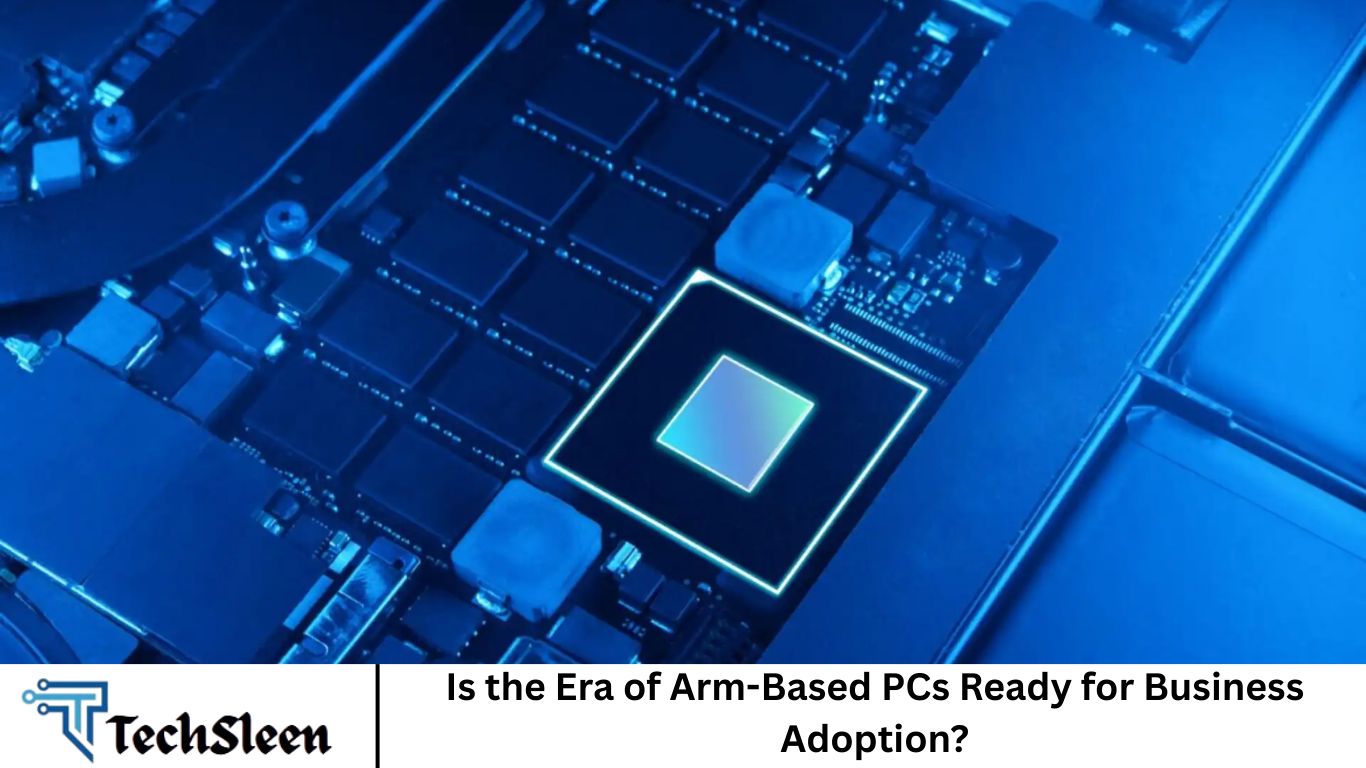
The computing landscape is evolving at a pace faster than most businesses can fully absorb. Traditionally, x86 architecture has dominated the personal computing and enterprise markets. Intel and AMD chips have powered desktops, laptops, and servers for decades.
Yet, a new contender is emerging—Arm-based processors. Long celebrated for their efficiency in smartphones and tablets, Arm chips are now entering the PC market, challenging long-held assumptions about performance, mobility, and energy consumption.
However, a significant shift is underway: Arm-based processors, long associated with smartphones and tablets, are making inroads into PCs. The question arises—is the era of Arm-based PCs ready for business adoption? This article delves deep into the technological, operational.
More Read: Mastering Entrepreneurship in 2025: A Complete Success Guide
Understanding Arm-Based PCs
What Is Arm Architecture?
Arm (Advanced RISC Machine) is a family of processors based on a Reduced Instruction Set Computing (RISC) architecture. Unlike traditional x86 processors, which use Complex Instruction Set Computing (CISC), Arm chips focus on efficiency.
They execute a smaller number of instructions per cycle but do so very efficiently, leading to benefits in energy consumption, heat generation, and overall performance-per-watt. Historically, Arm processors dominated mobile devices, such as smartphones, tablets, and IoT devices, because energy efficiency is critical in battery-powered devices.
Recently, Arm has expanded into the PC market, with Apple’s M1, M2, and beyond demonstrating impressive performance in laptops and desktops.
Advantages of Arm-Based PCs for Businesses
Exceptional Energy Efficiency
One of the most significant advantages of Arm-based PCs is energy efficiency. Businesses that operate large fleets of laptops or desktops can save significantly on electricity costs. Arm processors generate less heat, which can reduce cooling requirements in office environments.
Longer Battery Life
In today’s remote and hybrid work environments, battery life is crucial. Arm-based laptops such as the Apple MacBook Air with M2 or Qualcomm-powered devices can last well over 15 hours of real-world use. This allows employees to work on the go without frequent charging interruptions, improving productivity.
Lower Total Cost of Ownership (TCO)
While the initial purchase price may be comparable to traditional x86 devices, lower power consumption, reduced cooling requirements, and longer hardware lifespans can lower the total cost of ownership over time. Businesses that manage large IT deployments may find significant savings in operational costs.
Enhanced Security Features
Arm chips often integrate advanced security features at the silicon level. For instance, Apple’s M1 and M2 chips include a secure enclave that protects encryption keys, biometric data, and sensitive applications. Arm-based devices can offer hardware-enforced security, making them attractive for organizations with sensitive data.
Rapid Boot and App Performance
Arm-based PCs, especially those optimized for their architecture, can boot faster and run native applications with exceptional speed. Apple Silicon, for instance, has demonstrated significant performance gains in real-world productivity tasks, graphics, and media processing, showing that Arm can handle demanding business workloads efficiently.
Challenges and Considerations
Software Compatibility
The most critical challenge for Arm adoption in businesses is software compatibility. While most major software vendors are optimizing their applications for Arm, legacy Windows applications may not run natively on Arm chips. Emulation layers exist, but performance may vary.
Enterprises reliant on niche or legacy software must carefully evaluate whether Arm-based systems can support their workflow.
IT Infrastructure Integration
Integrating Arm-based devices into existing IT infrastructure can pose challenges. From device management to endpoint security, IT teams must ensure compatibility with MDM solutions, VPNs, and enterprise management tools. In some cases, organizations may need to adapt or upgrade infrastructure to accommodate Arm devices effectively.
Peripheral and Driver Support
Though improving rapidly, Arm PCs may encounter issues with peripheral compatibility. Printers, scanners, and specialized hardware may lack optimized drivers. Businesses with specialized equipment must verify compatibility before transitioning to Arm-based devices.
Ecosystem Maturity
The Arm PC ecosystem is maturing but still behind x86 in terms of software availability, accessories, and enterprise support. While companies like Apple and Microsoft are investing heavily in Arm support, the transition is ongoing, and businesses must weigh potential growing pains against long-term benefits.
Case Studies: Arm-Based PCs in Action
Apple Silicon in Enterprise
Apple’s shift to Arm-based M1 and M2 chips has been groundbreaking. Organizations using MacBooks for creative work, software development, and administrative tasks report improved battery life, faster performance, and reduced downtime.
With native applications optimized for Apple Silicon, businesses benefit from a smoother, more efficient workflow.
Microsoft and Qualcomm
Microsoft has partnered with Qualcomm to deliver Arm-based Windows PCs. While adoption is slower than Apple, Windows on Arm laptops offers long battery life and integrated LTE/5G connectivity, appealing to remote workforces.
Companies testing these devices report positive feedback for mobility and connectivity, though compatibility with legacy applications remains a consideration.
Emerging Enterprise Use Cases
Some startups and tech-forward companies are experimenting with Arm-based servers and developer workstations. Arm’s energy efficiency and performance-per-watt make it appealing for cloud and edge computing environments.
While mainstream adoption is still limited, these examples illustrate the potential for Arm-based devices beyond consumer laptops.
Strategic Considerations for Businesses
Hybrid Deployment
One strategy is to deploy Arm-based devices alongside existing x86 PCs. This hybrid approach allows organizations to test the technology in low-risk environments, evaluate performance and compatibility, and build expertise before full-scale deployment.
Cloud and Virtualization
Arm-based devices can complement cloud and virtualization strategies. By offloading intensive workloads to cloud services, businesses can leverage lightweight, energy-efficient Arm laptops for remote work while maintaining access to powerful compute resources.
Future-Proofing
With major chip vendors investing in Arm technology, future business software is likely to be optimized for Arm. Early adoption allows companies to future-proof their IT infrastructure, positioning themselves to take advantage of evolving performance, security, and efficiency improvements.
Employee Productivity and Satisfaction
Long battery life, low heat, and silent operation improve user experience, which can enhance employee satisfaction and productivity. For companies prioritizing flexible work arrangements and employee-centric policies, Arm-based PCs offer tangible benefits.
The Road Ahead: Is the Time Right?
Arm-based PCs have moved from novelty to serious contenders in the business market. Apple’s success with M1/M2 devices proves that Arm can deliver on performance, efficiency, and reliability. Microsoft and Qualcomm are actively building the Windows-on-Arm ecosystem, opening doors for enterprise adoption.
However, businesses must weigh factors like software compatibility, IT integration, and peripheral support. For organizations with standardized workflows and mainstream software, Arm adoption is increasingly viable. For those relying heavily on legacy applications, a cautious, phased approach is recommended.
The next 3–5 years will likely see accelerated adoption as more vendors release Arm-compatible devices, software support matures, and IT ecosystems evolve. Businesses that experiment now will be better positioned to capitalize on Arm’s advantages as adoption scales.
Frequently Asked Question
What are the main advantages of Arm-based PCs over traditional x86 PCs for businesses?
Arm-based PCs offer energy efficiency, longer battery life, enhanced security features, and often lower operational costs, making them attractive for mobile and hybrid workforces.
Are all business applications compatible with Arm-based PCs?
Not yet. While mainstream software like Microsoft Office, Adobe Creative Cloud, and modern browsers run natively or are optimized for Arm, some legacy or niche applications may require emulation or may not be supported.
Which companies are leading the Arm-based PC market?
Apple leads with its M1, M2, and subsequent Silicon chips. Microsoft and Qualcomm are also key players, offering Windows-on-Arm devices. Other manufacturers are entering the market with energy-efficient and mobile-focused devices.
Can Arm-based PCs replace x86 PCs entirely in businesses?
In some use cases, yes—especially for remote work, general productivity, and creative tasks. However, businesses relying on legacy Windows applications or specialized hardware may need a hybrid approach initially.
How does battery life of Arm-based laptops compare to x86 laptops?
Arm-based laptops often achieve 15–20+ hours of real-world battery life, significantly surpassing many x86 laptops in mobility-focused use cases.
Are Arm-based PCs more secure than x86 PCs?
Arm chips can offer hardware-level security features, such as secure enclaves for sensitive data. While security depends on the overall ecosystem, Arm offers promising advantages in device-level protection.
What factors should businesses consider before adopting Arm-based PCs?
Businesses should evaluate software compatibility, IT infrastructure integration, peripheral support, total cost of ownership, and long-term strategy for workforce mobility and energy efficiency.
Conclusion
The era of Arm-based PCs is no longer a distant prospect—it is arriving now. Businesses looking to enhance productivity, reduce energy costs, and embrace modern, mobile-first workflows have a compelling case to consider Arm devices. While challenges remain, especially around software compatibility.
Whether through hybrid deployment, cloud integration, or full-scale adoption, companies that experiment with Arm today are likely to reap substantial benefits tomorrow. The question is not just whether Arm-based PCs are ready for businesses—it is whether businesses are ready for the Arm revolution.