

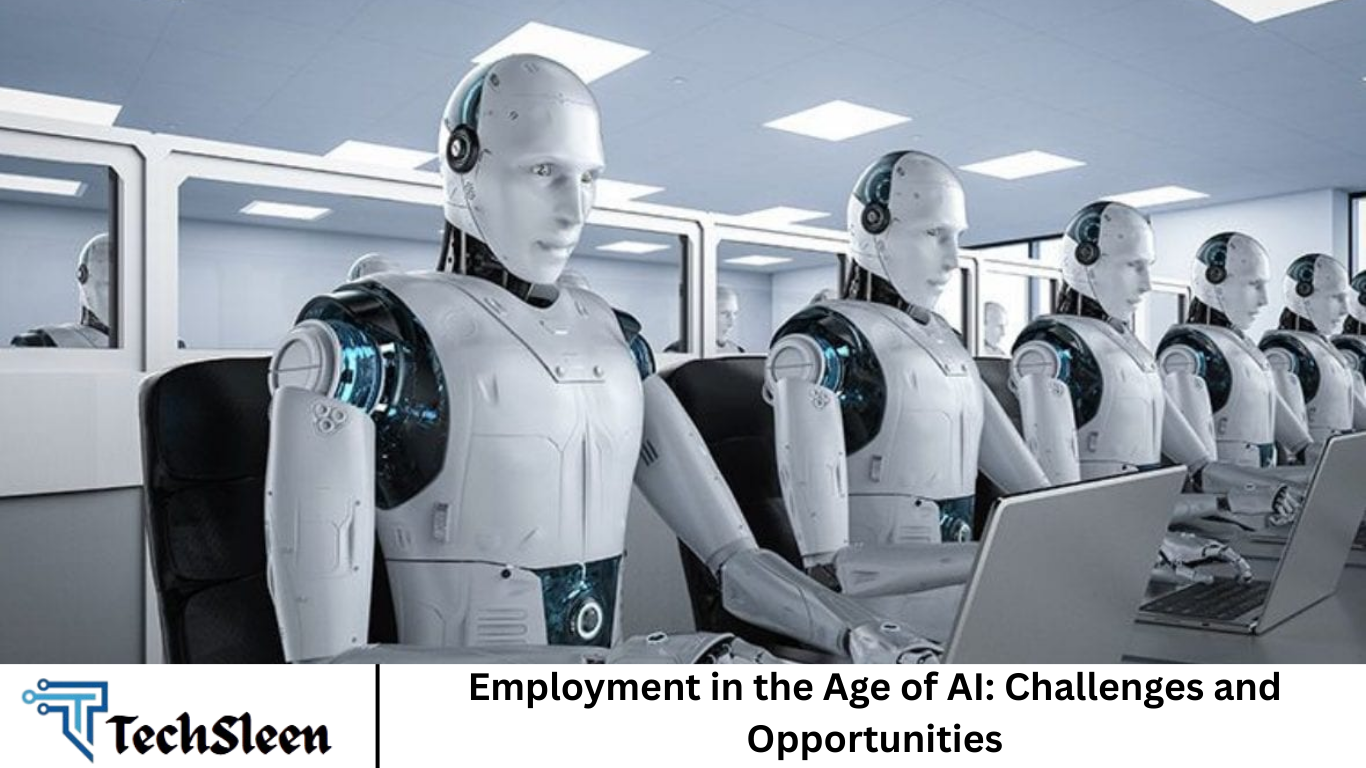
The rise of artificial intelligence (AI) is transforming the global economy at a pace few could have imagined a decade ago. AI technologies—ranging from machine learning algorithms to autonomous systems—are increasingly capable of performing tasks that were once the exclusive domain of human workers.
From customer service chatbots to advanced data analytics and self-driving vehicles, AI is redefining what it means to work in the 21st century. This transformation brings both unprecedented opportunities and significant challenges. On one hand, AI can enhance productivity, drive innovation, and create entirely new job categories.
On the other, it poses risks of job displacement, ethical dilemmas, and skill gaps that could leave many workers behind. Understanding these dynamics is essential for businesses, policymakers, and employees who want to thrive in this evolving landscape.
More Read: Is the Era of Arm-Based PCs Ready for Business Adoption?
The Impact of AI on Employment
Job Displacement and Automation
One of the most frequently discussed impacts of AI on employment is automation. AI systems are increasingly capable of performing tasks that are routine, repetitive, or rules-based. Jobs in manufacturing, transportation, and even administrative roles are particularly vulnerable. For example:
- Manufacturing: AI-powered robotics can assemble products faster and more accurately than human workers.
- Transportation: Autonomous vehicles may reduce the need for drivers in logistics and ride-hailing services.
- Administrative Work: AI tools can manage scheduling, bookkeeping, and customer inquiries with minimal human intervention.
While these technologies improve efficiency, they also raise concerns about widespread job displacement. The World Economic Forum predicts that by 2027, AI and automation could displace 85 million jobs globally, even as they create 97 million new roles.
This means the challenge is not merely about losing jobs, but about managing a major workforce transition.
New Job Opportunities
Despite fears of job loss, AI is also creating new employment opportunities. Entirely new sectors are emerging, and existing industries are evolving to accommodate AI-enhanced workflows. Some examples include:
- AI Specialists and Data Scientists: Professionals skilled in machine learning, AI development, and data analytics are in high demand.
- Human-AI Collaboration Managers: Roles focused on integrating AI tools into workflows while ensuring human oversight.
- Ethics and Compliance Officers: As AI raises ethical and legal questions, organizations increasingly need professionals to manage compliance and responsible AI practices.
In many cases, AI doesn’t replace jobs entirely—it changes them. Workers may find themselves collaborating with AI systems, using them as tools to enhance productivity and decision-making rather than competing against them.
Transforming the Workplace
AI is not just reshaping individual jobs; it is transforming entire workplaces. Intelligent automation can optimize processes, reduce errors, and improve customer experiences. For instance:
- Healthcare: AI assists doctors in diagnosing diseases, analyzing medical images, and personalizing treatment plans.
- Retail: AI-driven recommendation systems and inventory management improve efficiency and customer satisfaction.
- Finance: AI-powered algorithms detect fraud, predict market trends, and automate routine banking tasks.
In all these cases, the human workforce is shifting from repetitive tasks to roles that require creativity, critical thinking, and emotional intelligence.
Challenges of AI in Employment
Skills Gap
One of the most pressing challenges posed by AI is the widening skills gap. Many workers do not have the technical expertise required to thrive in an AI-driven economy. This is particularly acute in industries where automation is rapidly replacing low-skill jobs.
Addressing the skills gap requires investments in education and training. Programs that teach coding, data analysis, and AI literacy are essential. Equally important are soft skills, such as problem-solving, communication, and adaptability, which remain difficult to automate.
Economic Inequality
AI has the potential to exacerbate economic inequality. High-skilled workers and technology owners may capture most of the economic benefits, while low- and mid-skill workers face stagnating wages or job loss. This could lead to social unrest and increased pressure on governments to intervene.
Policymakers may need to consider measures such as universal basic income (UBI), reskilling initiatives, and taxation of AI-driven productivity gains to ensure a more equitable distribution of wealth.
Ethical and Regulatory Challenges
AI raises complex ethical questions in employment. How should decisions made by AI systems, such as hiring or performance evaluation, be regulated? How can we prevent algorithmic bias that disadvantages certain groups of workers?
Governments and organizations must develop ethical frameworks and regulatory guidelines to govern AI use in the workplace. Transparency, accountability, and fairness are key principles to ensure AI benefits society as a whole.
Job Security and Mental Health
The uncertainty surrounding AI’s impact on employment can affect workers’ mental health. Anxiety about job displacement, rapid technology changes, and the need to continuously upskill can increase stress and reduce workplace morale.
Organizations need to support employees through change management programs, career counseling, and mental health resources to navigate the AI transition successfully.
Opportunities in the AI Era
Increased Productivity
AI has the potential to significantly boost productivity across industries. By automating repetitive tasks, workers can focus on higher-value activities that require creativity, judgment, and emotional intelligence. This can lead to faster innovation cycles, improved products and services, and enhanced competitiveness for businesses.
Job Creation in Emerging Fields
AI is giving rise to entirely new industries and job categories. Roles in AI development, robotics, cybersecurity, and human-AI interaction are expanding rapidly. This creates opportunities for workers to specialize in cutting-edge fields and for entrepreneurs to develop AI-based businesses.
Enhancing Human Potential
Rather than replacing humans, AI can augment human abilities. For example:
- AI-assisted design tools allow architects and engineers to create complex structures more efficiently.
- Predictive analytics help marketers understand consumer behavior and tailor campaigns more effectively.
- AI-driven medical diagnostics enable doctors to make more accurate and timely decisions.
By leveraging AI as a partner rather than a competitor, workers can achieve higher productivity and job satisfaction.
Flexible Work and Remote Opportunities
AI-powered platforms enable greater flexibility in how and where work is performed. Freelancers and remote workers can access global marketplaces, while companies can tap into distributed talent pools. This shift opens new career paths and work-life balance options for employees worldwide.
Strategies for Adapting to the AI-Driven Workforce
Upskilling and Reskilling
Continuous learning is essential in an AI-driven economy. Employees must acquire new technical skills while enhancing soft skills that machines cannot replicate. Organizations can support this by offering training programs, mentorship, and access to online learning platforms.
Embracing Human-AI Collaboration
Workers should view AI as a collaborator rather than a threat. By understanding AI tools and integrating them into daily workflows, employees can enhance productivity and creativity. Collaboration skills and AI literacy are increasingly valuable assets.
Policy and Governance
Governments and organizations must proactively manage the AI transition. This includes creating policies that protect workers, promote equitable growth, and regulate AI applications in employment. Ethical AI guidelines, data privacy laws, and workforce transition programs are essential components.
Entrepreneurship and Innovation
AI lowers barriers to entry for entrepreneurs by automating routine business processes and enabling data-driven decision-making. Individuals can leverage AI to launch startups, develop innovative products, and create new service models.
Future Outlook
The future of employment in the age of AI is neither entirely dystopian nor utopian. It is a landscape of possibilities, contingent on how society chooses to manage technological change. Key trends to watch include:
- Hybrid Work Models: Combining human creativity with AI efficiency.
- AI-Augmented Professions: Professions that blend human judgment with AI capabilities.
- Resilient Education Systems: Systems designed to equip workers with lifelong learning skills.
- Inclusive AI Policies: Policies that prevent AI from exacerbating social inequalities.
Ultimately, success in the AI era will depend on adaptability, innovation, and the ability to collaborate with intelligent machines.
Frequently Asked Question
Will AI take all jobs?
No. While AI will automate certain tasks, it will also create new roles and industries. Jobs requiring creativity, empathy, and complex decision-making are less likely to be replaced.
Which jobs are most at risk from AI?
Routine, repetitive, or rules-based roles—such as assembly line work, data entry, and some administrative tasks—are most susceptible to automation.
What skills will be most valuable in an AI-driven economy?
Skills in AI literacy, data analysis, problem-solving, creativity, critical thinking, emotional intelligence, and adaptability are increasingly valuable.
How can workers prepare for AI changes?
Workers should invest in continuous learning, upskilling in technical areas, and developing soft skills that complement AI capabilities.
Can AI improve job satisfaction?
Yes. By automating mundane tasks, AI allows workers to focus on more meaningful, creative, and impactful work.
How should governments respond to AI-driven employment changes?
Governments should promote reskilling programs, ethical AI regulations, social safety nets, and policies that ensure equitable growth and opportunities.
Are AI-created jobs sustainable long-term?
Many AI-created jobs are sustainable if workers continuously adapt to technological advancements. Fields like AI ethics, robotics, cybersecurity, and human-AI collaboration are expected to grow.
Conclusion
AI is transforming employment in profound ways, presenting both challenges and opportunities. While automation threatens certain job categories, it also creates new roles, enhances productivity, and empowers workers to focus on higher-value tasks.
Adapting to this AI-driven landscape requires a combination of individual initiative, organizational support, and proactive policy measures. Upskilling, embracing human-AI collaboration, and fostering innovation are critical strategies for thriving in the AI era.