

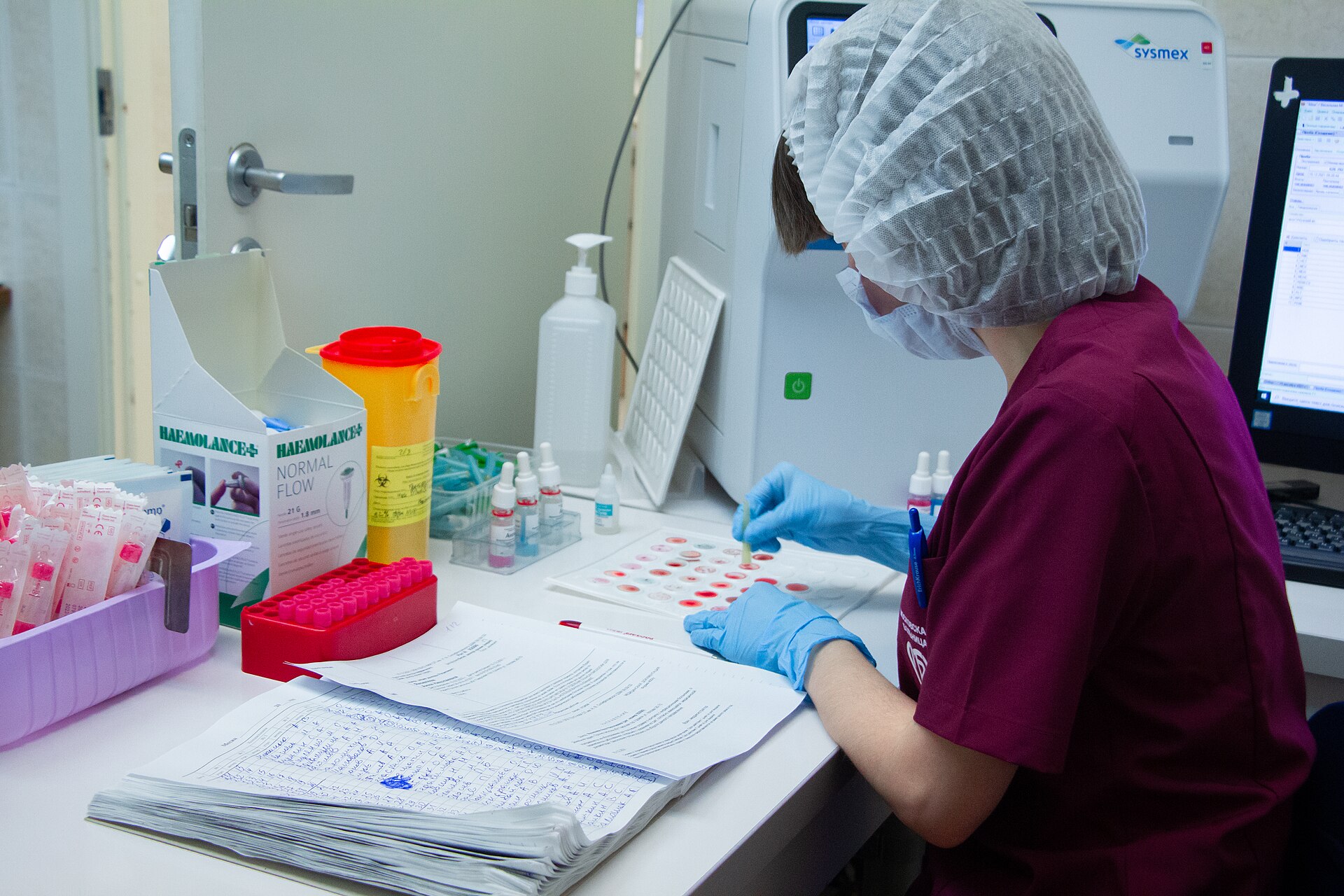
Diagnosing Alzheimer’s disease used to require choosing between an expensive brain scan, a spinal tap, or waiting for symptoms to declare themselves. A blood test is dismantling that triage. Assays measuring phosphorylated tau and amyloid ratios in a routine blood sample now identify Alzheimer’s pathology with accuracy rivalling the invasive standards in study after study — and regulators have begun clearing them for clinical use in patients showing cognitive symptoms. It is a diagnostic revolution arriving, unusually, as a cheaper and simpler test rather than a costlier one.
The timing matters because treatment timing matters. The new generation of anti-amyloid therapies shows its modest benefits earliest in the disease course, which converts early detection from an academic nicety into the gateway to care. Blood tests also transform the economics of finding patients: primary-care doctors can now triage memory complaints with a blood draw, reserving scarce specialist scans for confirmation — a workflow validated in primary-care studies covered by the National Institutes of Health. Trial recruitment, historically slow and expensive, accelerates when likely candidates can be screened from a vial. Advocacy and research organisations such as the Alzheimer’s Association have published guidance to help clinicians integrate the tests responsibly.
The Hard Questions Arrive With the Easy Test
A test this accessible surfaces dilemmas the old scarcity suppressed. Biomarker-positive people may remain symptom-free for years or forever; telling them carries psychological, insurance and employment consequences that vary wildly by jurisdiction. False reassurance and false alarm both exist at the margins of any assay, and demand will surge against a specialist workforce that has not grown. Ethicists argue the answer is not to withhold the test but to build the counselling around it — diagnosis as the start of planning, not a verdict. Follow the medicine in our health coverage.
Knowing Earlier, Living Accordingly
Prevention Moves Into the Frame
A diagnostic revolution quietly rearranges the research agenda behind it. If Alzheimer’s pathology can be identified a decade before symptoms, trials no longer need to wait for dementia to test prevention — they can recruit the biomarker-positive and measure whether decline can be delayed or forestalled, the strategy that transformed cardiology when cholesterol became measurable. Lifestyle evidence is being re-read in this light: the hearing aids, blood-pressure control, exercise and sleep that correlate with lower dementia risk may soon be prescribed against a personal biomarker rather than a population average. Pharmaceutical pipelines are adjusting too, with prevention trials that would have been unthinkable when diagnosis required a spinal tap. The blood test’s largest effect may thus be on people who never take it: a field that can finally see its disease early enough to learn how to stop it, rather than only how to name it.
The counselling profession forming around the test deserves notice. A biomarker result is not a diagnosis, still less a destiny, and communicating a probability about one’s own mind — to a person who came in worried about forgetting names — is a clinical skill the health system must now mass-produce. Genetic counsellors, whose discipline was built for exactly this conversation, are the template; memory clinics are borrowing their scripts and their caution. The test’s accuracy will keep improving. The harder technology — telling a human being what the result means for the life they planned, honestly and without cruelty — is the part that scales only as fast as people can be trained to do it.
For families, the change is already concrete: fewer years of unexplained decline, earlier legal and financial planning, and access to trials and therapies while they can still help. The blood test does not cure Alzheimer’s, and its arrival should not be confused with victory. It does something quieter — it moves the moment of knowing years earlier, into the part of life where knowing can still change decisions. Medicine rarely gets to offer time. Here, in a single tube of blood, it does.
