

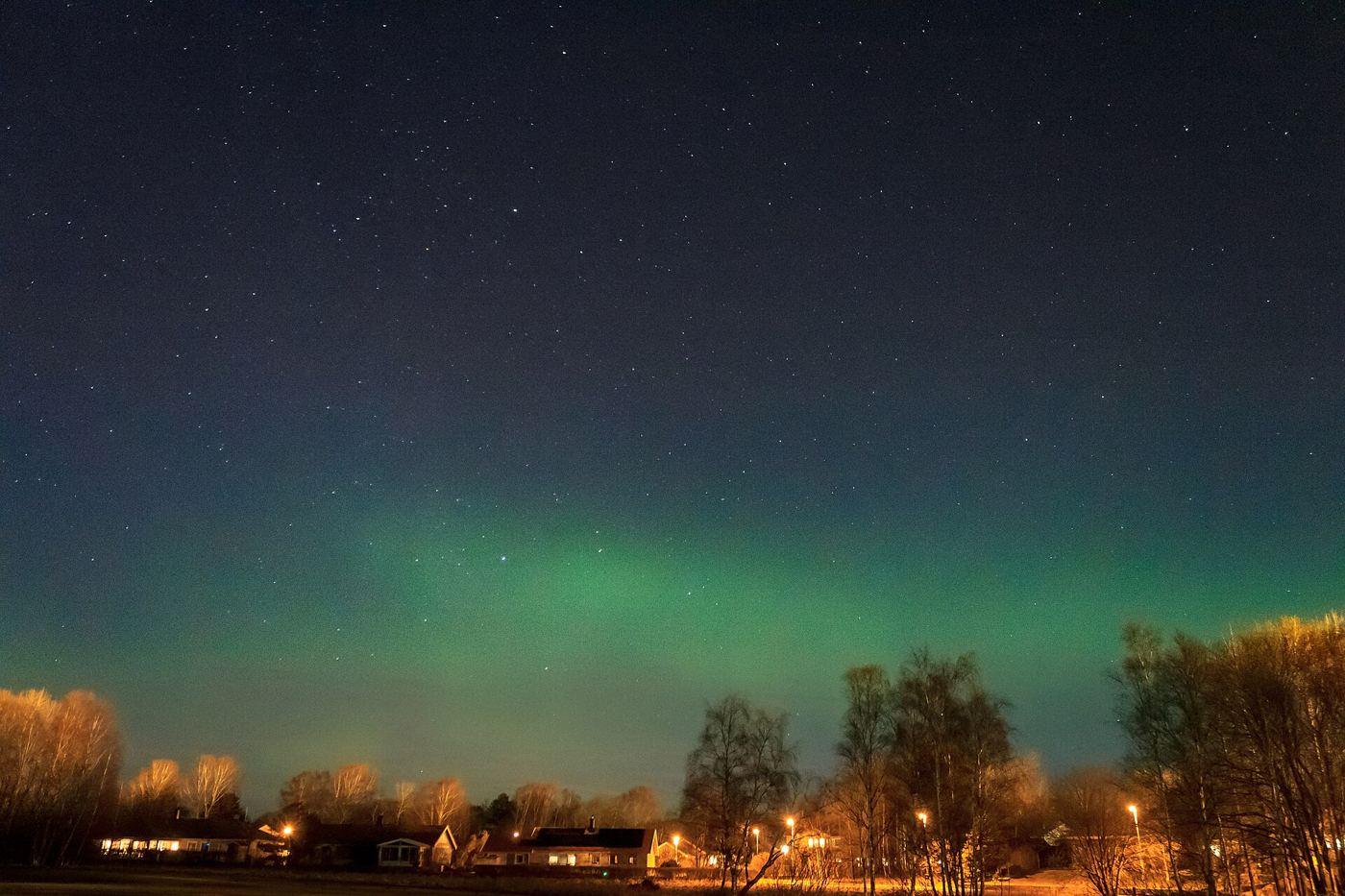
When a burst of charged particles leaves the Sun and strikes Earth, the night sky can light up with curtains of green, red and purple. Auroras form when solar particles collide with gases high in the atmosphere, exciting oxygen and nitrogen atoms that release the energy as light. They are usually confined to the polar regions, but during strong geomagnetic storms the display spreads far towards the equator, bringing the northern lights to skies where they are rarely seen. The Sun is currently near the peak of its roughly eleven-year activity cycle, so powerful storms and vivid auroras have become more frequent, thrilling skywatchers and photographers around the world. The colours depend on altitude and gas: green comes from oxygen around 100 kilometres up, while rare red auroras glow higher, where the air is thinner.
What the Evidence Shows
The same solar storms that create beautiful auroras can also threaten the technology modern life depends on. Intense geomagnetic activity can disrupt satellites, degrade GPS signals, interfere with radio communications and, in the worst cases, overload power grids. Solar observatories and space weather forecasters therefore track sunspots, solar flares and coronal mass ejections around the clock, giving operators hours of warning to protect sensitive equipment. For the public, the advice is simple: watch the forecast, find a dark sky away from city lights, and look north on a clear night when a storm is predicted. Power companies can reduce the risk by adjusting loads and disconnecting vulnerable transformers when a major storm is forecast, and satellite operators can put spacecraft into safe modes until the storm passes. Reporting and analysis from sources such as NASA track the same developments, and specialists following the solar storms painting auroras across the sky say the direction is now consistent across independent lines of evidence.
The Wider Context
Funding bodies are watching the solar storms painting auroras across the sky closely because the work sits at the junction of basic curiosity and practical return. Grant panels increasingly ask for a path from discovery to application, while researchers push back that the most valuable uses of fundamental science are rarely the ones written into the original proposal. The tension is productive when both sides stay honest about timescales.
What Happens Next
The long view on the solar storms painting auroras across the sky is that fields advance by accumulation rather than by single announcements. This result adds a solid, checkable piece to a structure many teams are building, and its authors have shared their data so the piece can be tested from every side. That is how the picture eventually becomes reliable enough to act on. You can follow related developments in our coverage of science.
It is also worth remembering how quickly the picture in this area has changed before. Positions that looked settled a few years ago have been revised as new data arrived, and the same humility is appropriate now. The strongest coverage of this subject, and the most useful advice, tends to come from sources that update their views openly when the facts move, rather than defending an earlier position long after it has stopped fitting the evidence available.
