

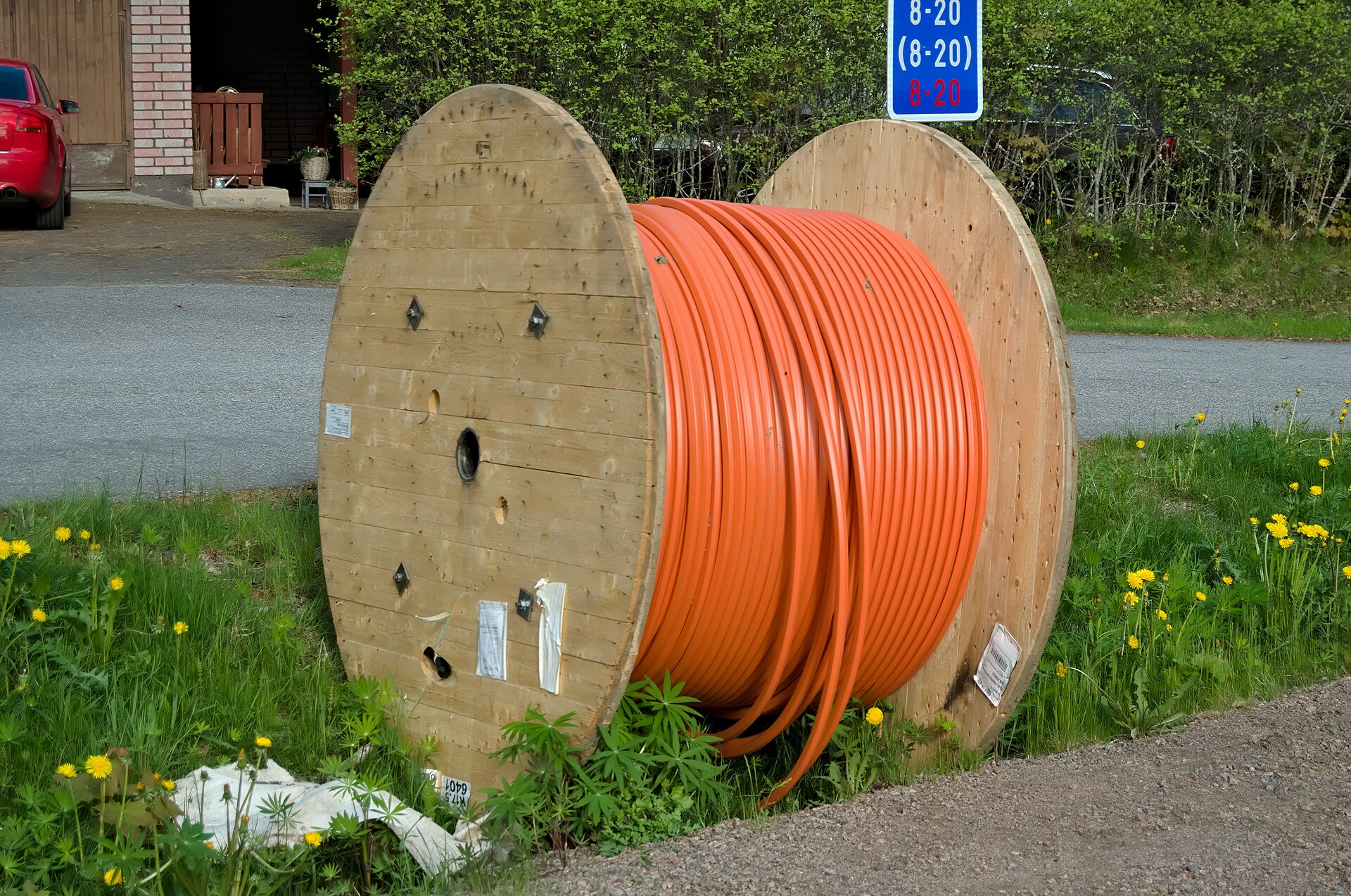
Quantum computing tends to grab the headlines, but the quieter revolution may be quantum communication. Laboratories on several continents have spent the past few years moving quantum networks off the optical bench and into real fibre, real buildings and even links between cities — sending fragile quantum states across infrastructure that was built for ordinary internet traffic.
The goal is not a faster video call. Quantum networks promise communication whose security rests on physics rather than mathematics: any attempt to intercept a quantum key disturbs the state being carried and reveals the eavesdropper. Longer term, linked quantum processors could pool their power, and distributed sensors could measure the world with a precision no single instrument can match.
Why Entanglement Is the Hard Part
The resource that makes all of this possible is entanglement, a correlation between particles so strong that measuring one instantly constrains the other. Preserving entanglement across kilometres of fibre, through junctions designed for classical light, is brutally difficult. Photons are absorbed, states decohere, and the signal that survives can be too weak to use. Research groups publishing in Nature have reported steady progress on each of these fronts, from better quantum memories to repeaters that can extend a link’s reach.
Repeaters are the field’s missing component. Classical networks simply copy and boost a fading signal; quantum states cannot be copied, a restriction known as the no-cloning theorem. A quantum repeater must instead swap entanglement along a chain, holding states in memory while neighbouring links succeed. Prototypes exist, and each demonstration that works outside a shielded laboratory narrows the gap between physics experiment and engineering project.
Standards, Testbeds and First Customers
Governments have noticed. The National Institute of Standards and Technology in the United States has been running post-quantum cryptography standardisation in parallel, precisely because quantum networks and quantum computers advance together: the same technology that could secure communications could also threaten the encryption the world currently relies on. Metropolitan testbeds in Europe, China and North America now let banks, agencies and researchers trial quantum key distribution on live networks.
The first customers are likely to be organisations with secrets that must stay secret for decades — governments, financial institutions, health systems — because data intercepted today could be decrypted by a future quantum machine. That ‘harvest now, decrypt later’ threat gives quantum-safe communication a business case even before full quantum networks arrive.
What to Watch
For technology readers, the milestones that matter are unglamorous: entanglement held over longer distances, repeaters running for hours rather than minutes, and quantum links surviving in ordinary telecoms ducts rather than dedicated fibre. Coverage of those milestones, and of the companies forming around them, is a running theme at TechSleen, where our Tech News section tracks research as it turns into products.
Scepticism remains healthy. Quantum networks will not replace the classical internet; they will sit alongside it, carrying keys and linking specialised machines, much as GPS satellites quietly underpin systems most users never think about. Timelines quoted in years have slipped before in quantum research, and the engineering of cryogenics, photon sources and memories at scale is genuinely hard.
There is a workforce story inside the technology story, too. Quantum networking needs a hybrid kind of engineer — part photonics specialist, part network architect, part cryogenics technician — and universities have only recently begun training for the combination. Companies report that experienced quantum engineers are among the hardest people in technology to hire, which is one reason testbeds double as training grounds, and why governments funding the networks usually fund the courses alongside them.
Even so, the direction is set. A technology that lived in single laboratories now has testbeds, standards work, start-ups and state funding aligned behind it. When quantum links start carrying real keys for real institutions — quietly, without ceremony — the lab bench era will be over, and the network era, with all its new questions about control and access, will have begun.
